Review replies are public customer service. The original reviewer matters, but so do future customers who may read the exchange months later. A calm, specific and proportionate reply usually builds more trust than a defensive explanation or a generic “Thanks for your feedback.”
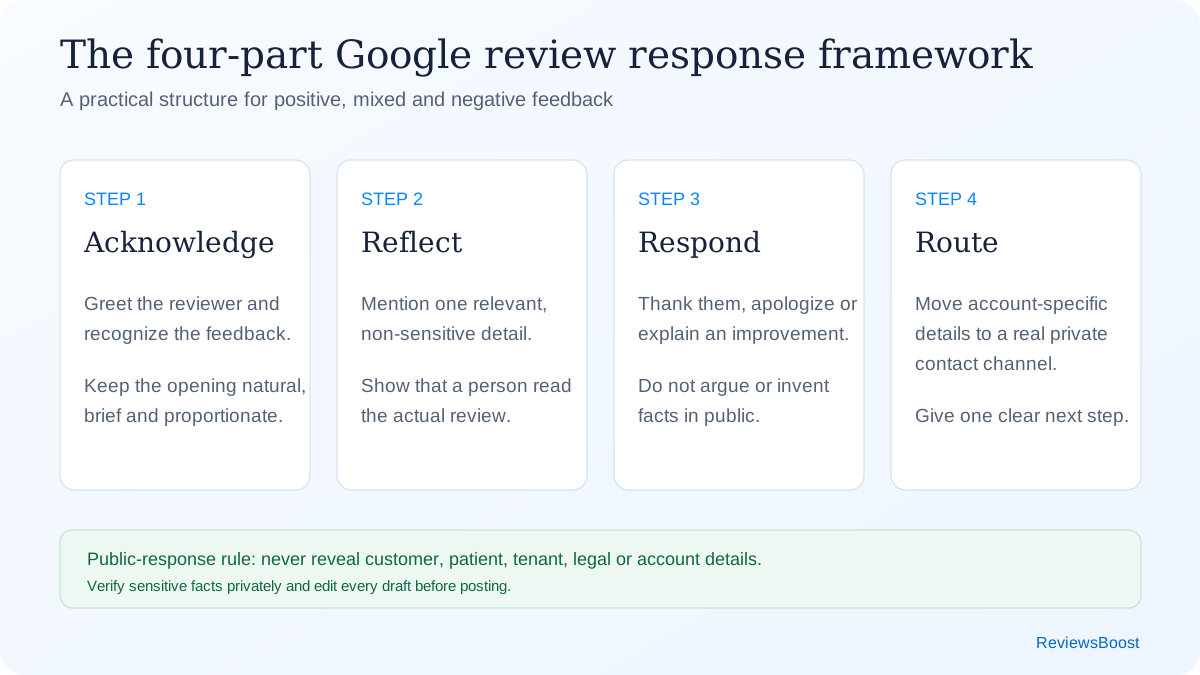
A four-part response framework
- Acknowledge: greet the reviewer and recognize the feedback.
- Reflect: mention one safe, non-sensitive detail so the reply is clearly relevant.
- Respond: thank them, explain the improvement, or apologize for the experience without arguing.
- Route: if account details are needed, invite a private conversation through a real contact channel.
How quickly should a business reply?
Consistency matters more than replying within minutes. Set a daily or several-times-a-week queue, and pull urgent issues forward: threats, personal information, safety allegations and suspected fake reviews. If someone is upset, let them cool down before they publish anything.
How long should a reply be?
Let the length of the review set the length of the reply. A short positive rating may need only two sentences. A detailed service failure deserves more care, but the public response is not the case file. Handle the specifics privately.
Positive Google review response examples
Thank you, [First Name]. We appreciate you choosing [Business Name] and taking a moment to leave a review. We hope to see you again.
Thank you for recognizing [Employee First Name]. We’ll make sure your kind feedback reaches them. We’re glad the team made your visit easy.
Thank you for continuing to trust our team, [First Name]. It means a lot to hear that your experiences have been consistently positive.
We’re glad your first visit went smoothly. Thank you for sharing what stood out, and welcome to [Business Name].
Thank you for the thoughtful review. We’re pleased that [safe product or service detail] worked well for you, and we appreciate the specific feedback.
Thanks for highlighting the quick turnaround. Our team works hard to keep the process efficient without compromising the result.
Thank you for supporting a Canadian business and for sharing your experience. We’re grateful to serve customers in [community].
Thank you for the rating, [First Name]. We appreciate your support.
Three- and four-star review response examples
Thank you for the balanced feedback. We’re glad you enjoyed [positive detail], and your note about [improvement area] has been shared with the team.
Thank you for your review. We appreciate the feedback and would be glad to learn what could make a future experience even better at [contact channel].
Thank you for your patience and for mentioning the wait. We’re reviewing how we schedule and communicate during busy periods so expectations are clearer.
Thank you for sharing both what worked and your thoughts on value. We aim to make pricing and what is included clear before service, and we’ll review that communication.
We appreciate the feedback. We’re sorry your preferred item was unavailable, and we’ve passed the note to the team responsible for inventory.
Negative Google review response examples
Do not demand that the reviewer delete or change the post. Avoid blaming the customer, naming staff who were not already named, or asserting facts you cannot safely prove in public. If your business made a mistake, a direct apology is stronger than “we’re sorry you feel that way.”
We’re sorry this experience fell short. We’d like to understand what happened and identify a practical next step. Please contact [name/team] at [email or phone] with the date of your visit.
We apologize for the delay and the lack of clear updates. That is not the communication standard we aim for. Please reach us at [contact] so we can review your visit privately.
Thank you for bringing this to our attention. We take concerns about how people are treated seriously. We’d like to gather the details privately at [contact] and review them with the appropriate manager.
We understand why an unexpected charge would be frustrating. We cannot review account details publicly, but our billing team can examine the invoice with you at [contact].
We’re sorry the result did not meet expectations. Thank you for describing the issue. Please contact [team] at [contact] so we can understand the circumstances and discuss available options.
We apologize for the inconvenience and understand the time this cost you. Please send the booking or order details to [contact] so we can investigate without sharing personal information here.
We’re sorry the policy and available options were not clear. We’d like to review what was communicated and make sure you receive a complete explanation. Please contact [manager/contact].
Thank you for raising this. We take safety concerns seriously and are reviewing the matter. Please contact [manager] at [contact] with the visit details so we can investigate promptly.
We can see that this experience was frustrating. We want to understand the underlying issue and keep the conversation constructive. Please contact [team] at [contact] so we can review it directly.
A negative review response strategy for small businesses
When replying to a bad Google review, use a repeatable process rather than improvising while frustrated. Verify the interaction privately, identify the one concern that matters most, acknowledge its impact, and give the reviewer a monitored private route to continue. Write for the next Canadian customer who will read both sides of the exchange.
- Pause: let the first emotional reaction pass before drafting.
- Verify: check the date, location and transaction without exposing private records.
- Acknowledge: recognize the experience or concern without admitting an unverified fact.
- Respond: explain one concrete action or next step in plain language.
- Route: move account-specific details to a monitored private channel.
- Record: tag the underlying issue so repeated complaints lead to an operational fix.
For Canadian businesses in regulated or privacy-sensitive fields, keep the public reply especially restrained. A professional response can show care without confirming that someone is a customer, patient, tenant or employee. Google explains that approved owner replies appear publicly below the review and that the reviewer is notified, so treat every response as published business communication.
Inaccurate, mistaken or suspected fake review examples
Before calling a review fake, check alternate names, gift recipients, third-party bookings and dates. People do not always appear under the name used on a public profile. If the content may violate policy, save the evidence and use the reporting process in our fake Google review reporting guide.
We have not been able to match the details in this review to our records. We still want to understand the concern. Please contact [team] at [contact] with the date and service location so we can investigate privately.
We’re sorry to hear about the experience described. The details do not appear to match this location. Please contact us at [contact] so we can help identify the correct business or review the matter.
We take this concern seriously, but our records differ from parts of the account posted here. To protect everyone’s privacy, we won’t discuss transaction details publicly. [Manager] is available at [contact] to review them directly.
We believe this post may involve a conflict of interest and have asked the platform to review it. If the author had a genuine customer experience, they can contact [team] at [contact] so we can investigate.
Sensitive-industry response examples
Thank you for sharing your concern. We protect the privacy of everyone who contacts our clinic and cannot discuss individual circumstances publicly. Our privacy contact can be reached at [contact].
We appreciate the feedback. Confidentiality prevents us from confirming or discussing any matter here. Anyone with a service concern can contact [role] at [contact] for a private review.
Thank you for raising the concern. We will not discuss personal records or individual circumstances publicly. Please use [formal contact or complaint channel] so the matter can be reviewed appropriately.
We take concerns involving young people seriously and will not discuss any details publicly. Please contact [designated role] at [contact] so the appropriate person can review the matter privately.
A reliable response workflow
- Assign ownership. Decide who replies and who approves high-risk responses.
- Classify. Mark feedback positive, constructive, service recovery, suspected policy violation, privacy-sensitive or urgent.
- Verify privately. Check facts without publishing customer data.
- Draft for the next reader. Be calm, relevant and clear about the next step.
- Escalate when needed. Threats, personal data, discrimination allegations and safety reports need a defined path.
- Record the theme. A reply closes the public loop; an operational action prevents recurrence.
Should businesses use the same template every time?
Templates save time and keep replies within sensible boundaries, but exact repeats look careless. Use the examples as a frame, then vary the opening and closing and mention one safe detail when you have one. Do not invent details just to sound personal.
Should a business mention keywords in review replies?
Write for the person who left the review, not for an imagined algorithm. Use the business name or service naturally when it fits, but do not cram in location-and-service phrases. They make a reply awkward and can make it feel less trustworthy.
Can I ask a reviewer to update a review after resolving the issue?
Focus first on resolving the concern. Do not offer an incentive or condition service on a change. A neutral note that the customer is free to update their review based on the full experience should only come after resolution and without pressure.
Pre-publish checklist
- The response addresses the correct review and location.
- The tone is calm and would make sense to a future customer.
- No private or sensitive information is confirmed.
- No unsupported accusation or legal threat appears.
- The next step uses a monitored email or phone number.
- The reply is proportional and avoids a public argument.
- A serious issue has an internal owner beyond the public reply.